September 15, 2026
Homeowners expect a driveway to support daily traffic, complement the house, and withstand changing weather without constant attention. Asphalt meets those priorities through smooth performance, efficient installation, repairability, and a clean appearance. A well-built asphalt driveway can connect the street, garage, walkways, and other exterior features. Performance, however, depends on more than the surface. Soil conditions, excavation, base preparation, drainage, asphalt thickness, compaction, climate, and maintenance influence the result. Understanding these factors explains asphalt's popularity and helps homeowners decide whether it suits their property.
1. A Practical Balance of Cost and Performance
Asphalt is often less expensive to install than pavers or some concrete driveway designs, particularly across a large area. Final pricing still varies based on removal of existing pavement, excavation depth, grading, base materials, drainage needs, accessibility, and local material costs. A low surface price may not represent good value if the estimate omits necessary groundwork. Homeowners should compare the complete scope, not merely a price per square foot. Spending appropriately on the base and drainage can protect the pavement from settlement, standing water, and other problems that shorten its useful life.
Long-term value also comes from the range of repair options available. Small cracks may be filled, isolated failures may be patched, and a structurally sound surface with widespread wear may qualify for resurfacing. These options can allow work to match the extent of the damage instead of requiring complete replacement every time a defect appears. The correct solution depends on the cause, however. Repairing the visible surface without correcting failed base material or drainage may provide only temporary improvement. An asphalt driveway offers the strongest value when installation quality and timely upkeep work together.
2. Installation Begins Below the Finished Surface
Site assessment is the first step in creating durable pavement. Contractors examine the slope, soil, drainage patterns, expected vehicle loads, existing materials, and access for equipment. Old pavement, vegetation, soft soil, or unsuitable material may need to be removed before the area is graded. Local permits, setback rules, drainage requirements, or neighborhood restrictions may also affect the design. Addressing these concerns early helps prevent water from moving toward the garage, collecting along the edges, or weakening lower layers. It also allows the finished elevation to connect properly with streets, sidewalks, and garage floors.
The prepared subgrade supports a compacted aggregate base that distributes loads and promotes stability. Base thickness and material specifications should reflect soil, climate, and anticipated traffic rather than a universal formula. After the base is shaped and compacted, the asphalt mixture is placed at the specified depth and rolled to achieve density and a smooth surface. Edges, transitions, and drainage slopes require careful attention during this stage. Because weaknesses below an asphalt driveway may not be visible after paving, detailed preparation and compaction are among the most important parts of the project.
3. Fast Installation Does Not Mean Instant Curing
Asphalt can often be placed and compacted relatively quickly once the site is prepared, limiting disruption to parking and household routines. That speed should not be confused with full curing. According to Today's Homeowner, a newly installed asphalt driveway may require about six months to finish curing and reach its maximum hardness. The pavement can generally become usable much sooner, but the contractor should provide the specific waiting period before vehicles are allowed. Temperature, mixture, thickness, weather, and site conditions can all influence early performance and access recommendations.
During the early hardening period, homeowners should follow the installer's directions carefully. Stationary tires, sharp turns, heavy concentrated loads, kickstands, jacks, and narrow trailer supports may leave impressions when the surface is still vulnerable, particularly during hot weather. Parking in varied positions can avoid placing repeated pressure on the same area. Fuel, oil, and chemical spills should be addressed according to professional guidance because some substances can soften asphalt binder. Normal use does not need to stop for six months, but reasonable care during this period can protect the finish while the material continues to harden.
4. Flexibility Supports Durability Across Seasons
Asphalt has a degree of flexibility that helps it respond to ordinary temperature-related movement. This characteristic can be useful in climates with seasonal expansion and contraction, although it does not make the pavement immune to cracking, frost movement, rutting, or settlement. Adequate drainage and a stable base remain essential because water entering lower layers can weaken support and contribute to damage during freeze-thaw cycles. In hot conditions, poorly designed mixtures or heavy stationary loads may also contribute to deformation. Material selection and installation practices should therefore reflect the climate and anticipated use.
Routine maintenance helps preserve that durability. Homeowners should watch for cracks, depressions, crumbling edges, standing water, vegetation growth, and areas where the surface begins to ravel. Prompt evaluation can determine whether a problem needs crack filling, patching, drainage correction, or more extensive work. Sealcoating may be recommended at appropriate intervals to protect and refresh the surface, but it should not be applied prematurely or used to conceal structural damage. A maintained asphalt driveway is more likely to remain smooth and functional than one allowed to deteriorate until water and traffic enlarge minor defects.
5. A Smooth Appearance Complements Many Homes
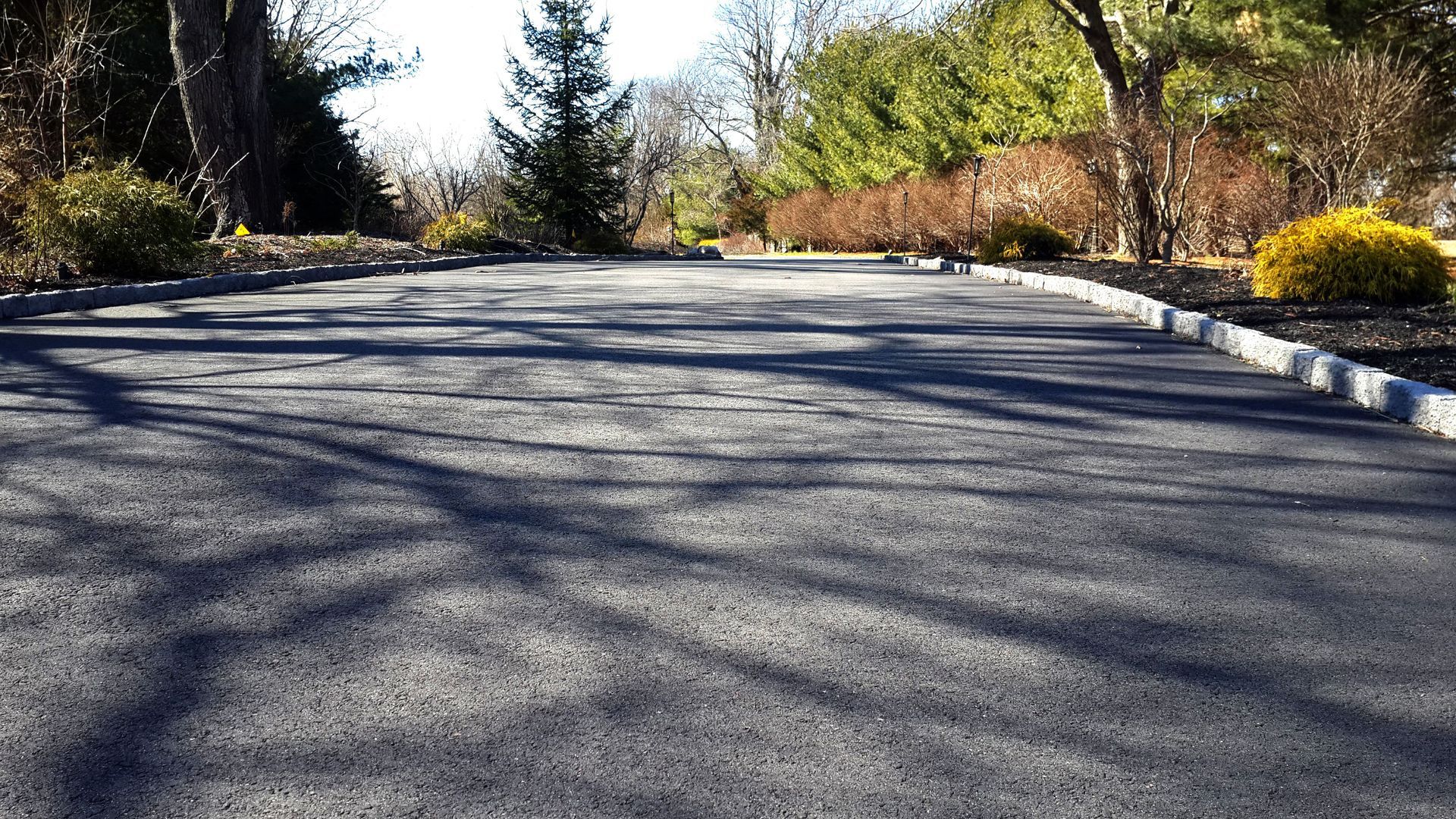
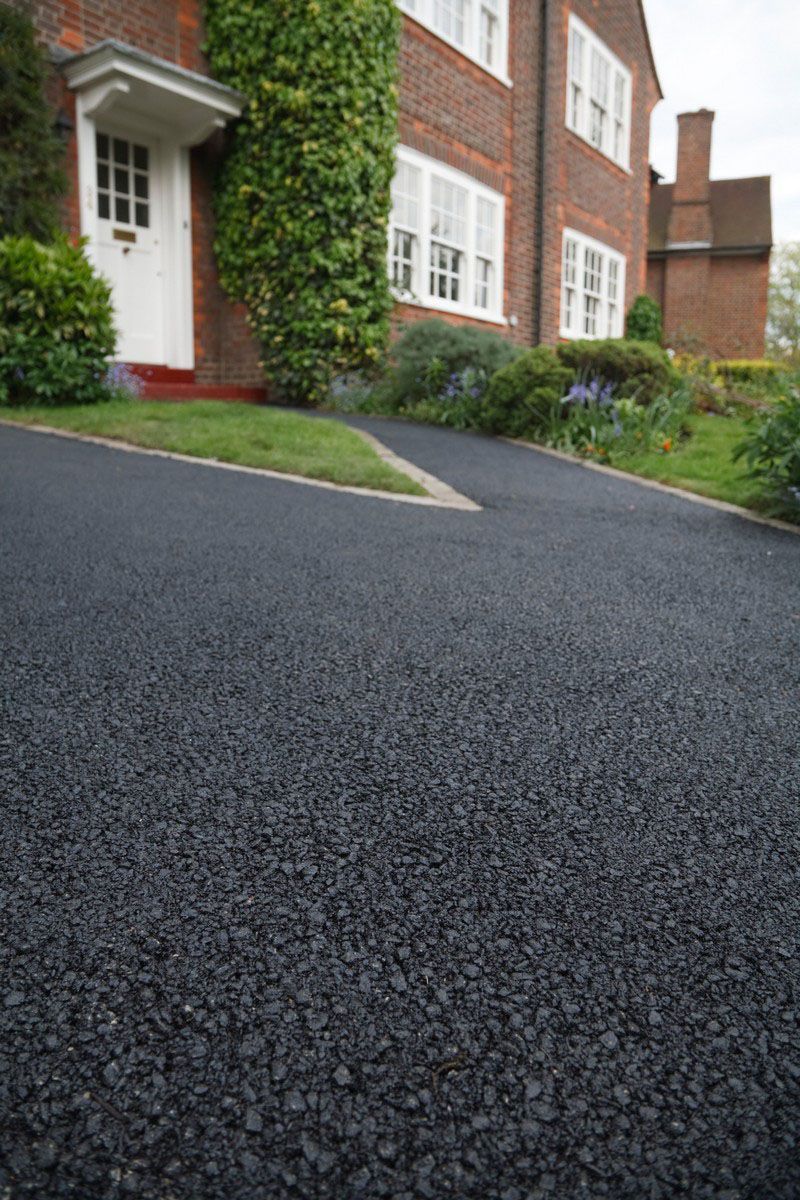
A driveway occupies a visible portion of many front yards, making its condition part of the property's overall presentation. Fresh asphalt creates a dark, consistent surface that can complement traditional, contemporary, and transitional architecture. Its continuous finish also provides a clear visual route from the street to the garage. Clean edges and carefully planned transitions can make the installation appear intentional rather than merely functional. Borders, adjacent walkways, retaining features, and landscaping may add contrast, although their design should not obstruct drainage or leave pavement edges unsupported.
6. Recycling and Permeable Options Add Flexibility
Removed asphalt can be processed as reclaimed asphalt pavement and used in new mixtures or other pavement applications. Reuse conserves some virgin aggregate and binder while diverting material from disposal. The recycled content available for a residential project depends on the supplier, mixture specifications, and local practices. Homeowners interested in this benefit can ask contractors what mix is proposed and how it meets performance requirements. Recycled material is not inherently lower quality; properly specified and produced recycled asphalt mixtures can provide performance comparable to conventional mixtures in appropriate applications.
Porous asphalt systems may also help manage stormwater by allowing water to pass through the pavement into a designed stone reservoir. These installations require suitable soil, engineering, specialized construction, and ongoing maintenance to prevent clogging. They are not interchangeable with conventional pavement and may not suit every site. When comparing asphalt with concrete or pavers, homeowners should consider initial cost, appearance, installation time, drainage, climate, maintenance, repair methods, and expected traffic. No material wins every category. Asphalt remains a leading option because it combines accessible performance with adaptable repair and design choices.
Asphalt remains a top residential driveway material because it balances cost, installation efficiency, durability, repairability, and understated style. The best results begin with a careful site assessment, stable subgrade, properly compacted base, effective drainage, suitable mixture, and correct placement. Early curing precautions and regular attention to cracks, edges, water, and surface wear then help protect that work. Homeowners should compare detailed estimates and select a design appropriate for their soil, climate, traffic, and visual goals. When those decisions are handled thoughtfully, an asphalt driveway can provide a smooth, strong, and attractive entrance that supports the property for years.